AgentAccounts Receivable agent · Finance and close
Accounts receivable automation that chases every overdue invoice
The agent reads your open receivables from SAP Business One or SAP S/4HANA every night, groups each customer’s overdue invoices into one reminder written on your policy, and reads the replies for promises, disputes and remittances. On day one every message waits for a person on your team to release it, and a broken promise reopens the account as soon as the promised date passes without the money.
Free · 30 minutes. We run the agent on a sample ageing like yours and talk through your collections policy.
01In short
What is accounts receivable automation?
Accounts receivable automation, also called collections automation, is software that runs collections on a policy: it tracks every open invoice, sends reminders, reads customer replies, records promises to pay and escalates disputes, so cash arrives on a rhythm. The Corpogents agent works from your SAP ledger and drafts every message for a person on your team to release.
| Reads from | Open invoices, credit notes, part-payments and due dates in SAP, plus customer replies in your collections mailbox |
|---|---|
| Works in | SAP Business One (HANA or SQL Server) and SAP S/4HANA |
| A person approves | Every message on day one; key accounts, escalations and credit holds always |
| First run | Open invoices grouped per customer, promises and disputes logged, the first reminders drafted for review |
Best of both worlds
Product speed. Custom fit.
You shouldn’t have to choose between a rigid software box and a year of custom build. The Accounts Receivable agent is both.
Switch it on
A proven agent, ready to run. Deployment is configuration and testing, not a build.
Shape it to you
Your rules, approval limits and SAP setup are agreed in Map, and anything specific to your business is built around you, at product speed.
02The problem
The cash is earned, and it is sitting in someone else’s bank
The goods shipped and the invoice went out. Now the money is somebody’s follow-up job: a Monday ageing report, a spreadsheet, and whoever has time to call. The loudest accounts get chased and the quiet ones slide. A promise made on a call lives in a diary until everyone forgets it.
Meanwhile a good customer is chased for an invoice they paid last week, because the reminder went out before anyone checked the bank. A short payment that is exactly the tax withheld at source gets queried as if it were a shortfall. And a dispute over one line holds up the chase on the whole account.
Collections does not fail because nobody shouts loud enough. It fails because follow-up depends on who remembered. What it needs is someone who never skips a week and checks the ledger before speaking.
- Read the accountThree open invoices, one credit note and last week’s receipt, read from SAP overnight
- Grouped 4 documents into one conversationOne reminder for the customer, not one per invoice, with both sides shown
- Dispute on INV-8816040 of 200 drums short. This invoice pauses; the rest keeps being chased
- Recognised the short payment as withheld tax4,200 short on INV-88102 matches the tax withheld, so it is settled, not chased
- Reminder drafted for 1 invoiceINV-88131, with the disputed invoice shown as paused. Waits for your collections lead to release it
03How the agent works
From overdue invoice to a kept promise, in five steps
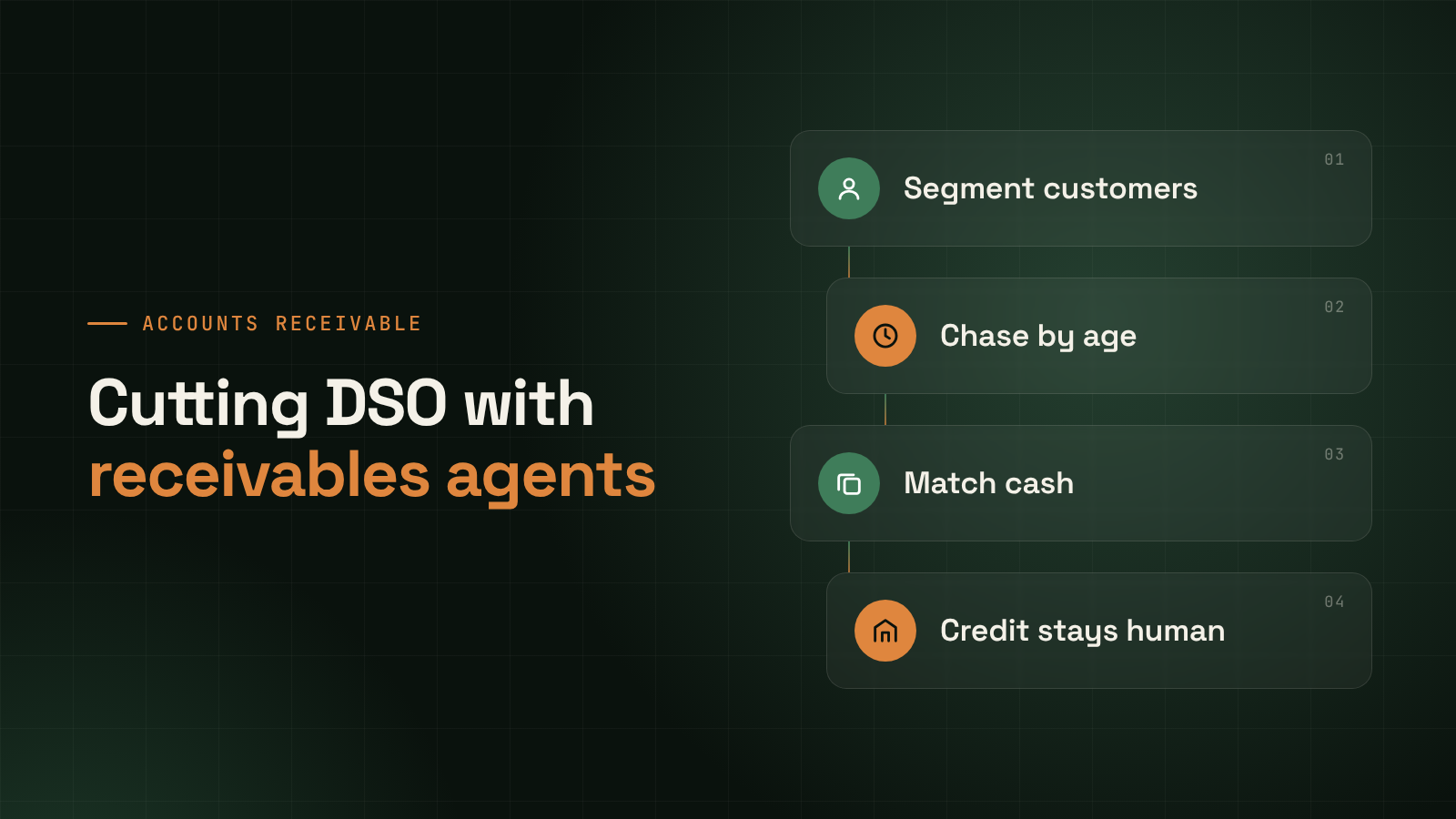
The agent works the ledger the way a good credit controller would: it reads the account, checks the balance before it speaks, and hands your team the decision.
- 01 · Reads
Reads the ledger nightly
Every night the agent pulls open invoices, credit notes, part-payments and real due dates from SAP. An invoice whose payment your team posted yesterday drops off the list before anyone drafts a reminder for it. The agent never posts or applies a receipt: cash application stays in SAP.
- 02 · Understands
Groups invoices per customer
It groups a customer’s invoices into one conversation, so eight overdue invoices still mean one letter, and sets the tone from how that customer actually pays and which segment your policy puts them in: distributor, OEM, exporter or public sector.
- 03 · Checks
Drafts the chase on your policy, then checks the balance
Reminders follow your ladder: how many days before the first nudge, how firm each step is, who signs a formal letter. In the second before anything is sent, the agent re-checks the live balance in SAP. If a receipt was posted overnight, the letter is stopped and rebuilt.
- 04 · Acts
Reads replies and logs every promise
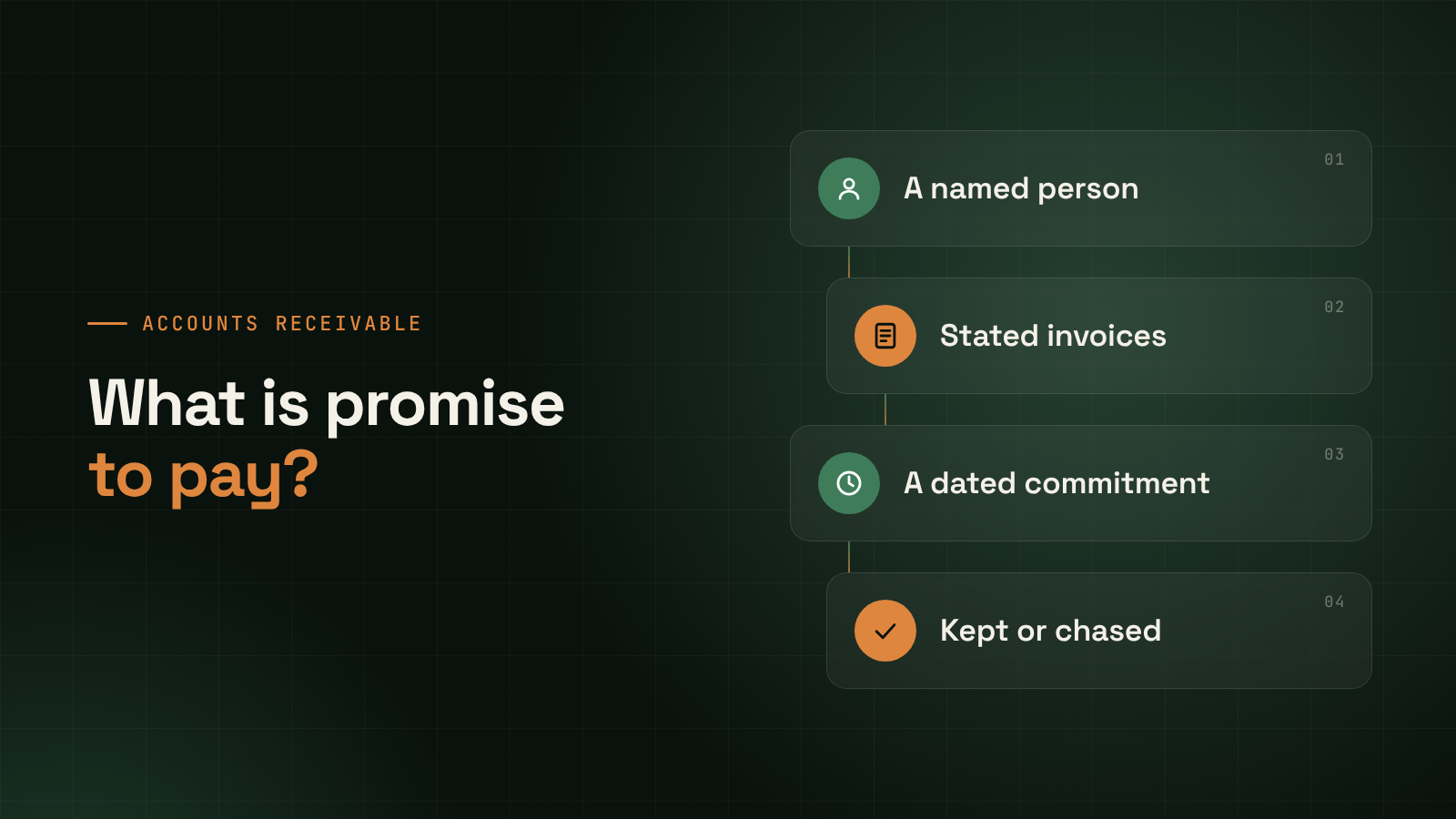
Each drafted reminder waits in one queue for a person to release. Replies are read for what they are: a promise to pay gets a date, an amount and an owner, and the reminders pause until that day; a dispute pauses only the disputed amount and goes to a named owner with a deadline; a claim that payment was made is checked against SAP before anything changes. A reply it is unsure of, written in another language or carrying a scanned remittance goes to a person to confirm.
- 05 · Learns
Escalates broken promises and learns who keeps their word
When a promise date passes without the money, the account reopens and moves one step up the ladder you set, with an escalation drafted for a manager. Every kept and broken promise is scored, so next month the chase starts from how each customer actually pays, not from a hunch.
Illustration: a Monday morning at a typical mid-size distributor
Say a distributor has a few hundred customers and a few thousand open invoices. On Sunday night the agent reads the ledger, drops the accounts that paid last week, groups the rest per customer and drafts one reminder each on your policy. Two customers replied during the week: one promised to clear by the 25th, so their reminders are paused with a timer set to that day; one disputed a short delivery, so that invoice is paused while the rest of the account is still chased.
On Monday the collections lead opens one queue: the drafted reminders, the two replies already logged, and one account whose promise date passed on Friday, back at the top of the ladder.
Illustration of how the workflow runs. Not a measured client result.
- 23:10:04Read open items from SAP3 invoices, 1 credit note, 1 posted receiptSAP B1
- 23:10:09Grouped into one conversationTone set by segment and payment historyPolicy
- 23:10:12Read the reply on INV-88160Dispute: 40 of 200 drums short. That invoice pausedEmail
- 08:58:30Re-checked the live balanceNo receipt overnight. Reminder for INV-88131 draftedSAP B1
- NowWaiting for the collections leadRelease, edit or hold. Nothing reaches the customer until then.You
04Compared
The AR agent, a payment reminder tool and a spreadsheet ageing
| What matters | Corpogents AR agent | Payment reminder tool | Spreadsheet and phone |
|---|---|---|---|
| Who gets chased | Every overdue account, every week, on your policy | Everyone on the schedule, the same nudge | Whoever someone remembered |
| Letters per customer | One, covering all open invoices | One per invoice | One call, notes in a diary |
| Before it sends | Re-checks the live SAP balance | Sends on schedule | Depends on the ageing export |
| Replies and promises | Read, logged with a date and an owner, timer set | Land in an inbox | Live in the caller’s notes |
| Disputes | Only the disputed amount pauses, with an owner and a deadline | Whole account paused or chased | Whole account usually parked |
| Payments you cannot match | Held for a person to apply; the rest is still chased | Not seen | Applied when someone has time |
| Who sends | A named person releases every message on day one; key accounts always | The tool | Your team |
| Who runs and tunes it | We do, as a managed service | Your team | Your team |
05Control
A person sends every reminder
You decide how much the agent does on its own. On day one it reads the ledger and drafts, and that is all. Your finance head sees every message due in the next 24 hours and can pause all sending in one click.
It drafts every reminder and logs every promise. It never sends to a customer on its own.
Drafts first, you release
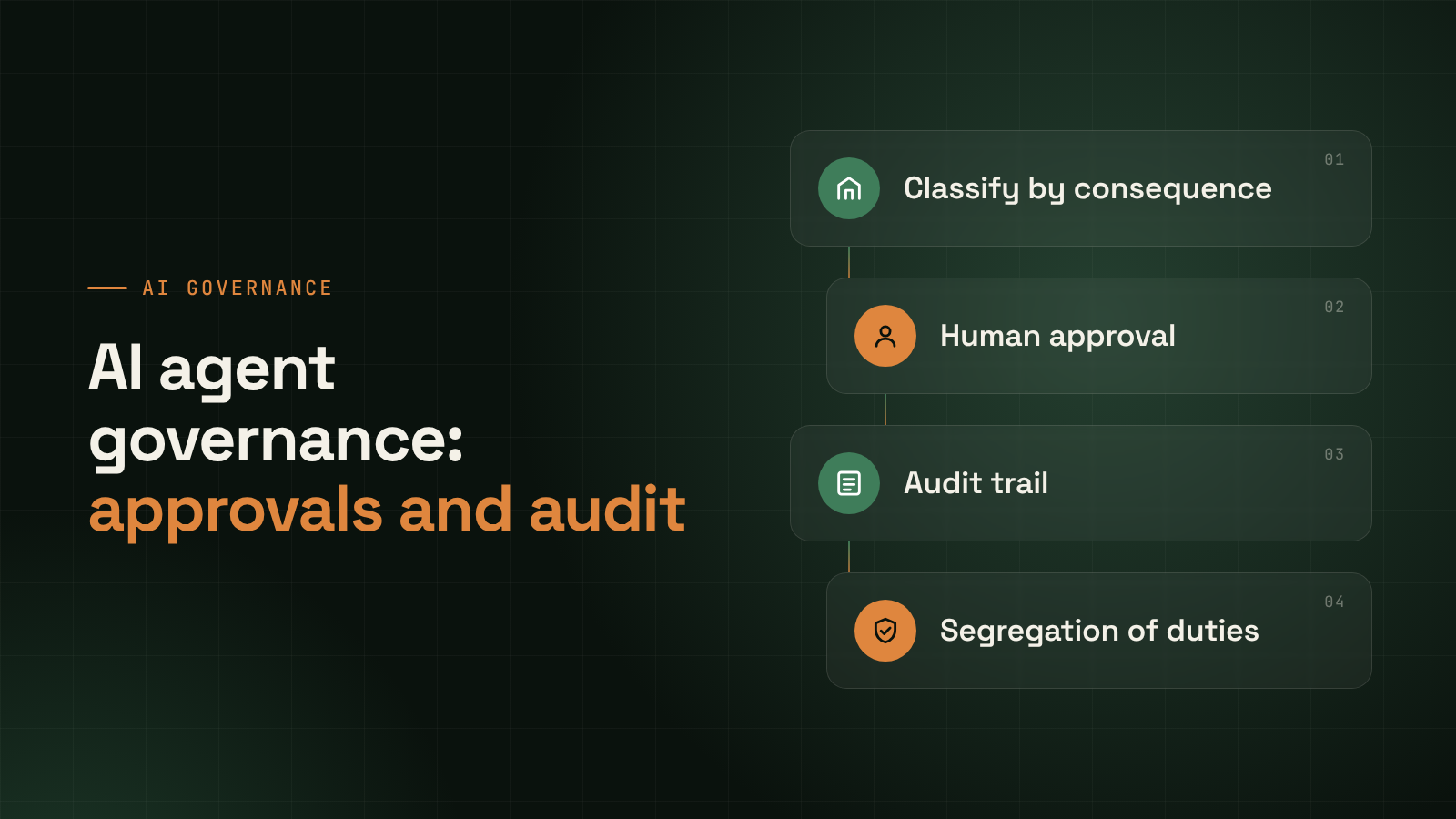
The agent drafts every reminder, statement and escalation. A named person releases anything that reaches a customer, your key accounts never receive an automatic message, and the hardest letters are reserved for your managing director.
- Ledger
It never chases a wrong number. Every figure is re-checked against your live SAP in the second before sending. If a receipt was posted overnight, the letter is stopped and rebuilt, never sent stale.
- Conduct
It never harasses. A weekly contact cap per customer, business hours only, and the moment a customer disputes an amount, that amount stops being chased. The rest still is. No reminder ever carries new bank details; payment always points to the account printed on your invoice.
- Access
Access your IT team controls. Agents run in the Corpogents cloud and connect to your SAP and a mailbox you grant, through a user your IT team creates and can revoke. We never train models on your data.
06Integrations
Works with SAP Business One and SAP S/4HANA
There is no new platform for your collections team. The ledger stays in SAP, reminders go out from your own mailbox, and the queue is one screen on a Monday.
- ERP
- SAP Business One (HANA or SQL Server) and SAP S/4HANA.
- Channels
- Reminders and statements go by email from a mailbox you set up for collections. A conversation on WhatsApp or the phone is logged by your team in one form, and the agent acts on it exactly as it would on an email.
- Short payments and cheques
- A payment short by exactly the tax withheld at source, under the rules where you operate, is treated as settled, not chased. Cheques and post-dated cheques are logged on handover and tracked to clearing; a bounce reopens the invoice.
- Unapplied cash
- A payment with a remittance note is matched to the invoices it names, and those invoices pause while the receipt is posted. A round sum with no explanation goes to a person to apply, and the rest of the account is still chased: unmatched money never buys silence. The agent never posts a receipt; cash application stays in SAP.
- Policy
- Days before the first nudge, the ladder, tone per segment, the weekly contact cap, business hours in each customer’s time zone and holidays: all configuration, held in writing.
- Approvals and credit holds
- Collectors release routine drafts, your finance head approves escalations and credit hold recommendations, and the hardest letters are reserved for your managing director. A hold on new sales orders is placed in SAP by your team.
07What changes
What changes for your collections team
- Follow-up stops depending on who remembered. Every overdue account is in the queue every week.
- Every promise carries a date, an amount and an owner, and the account reopens on the day it is broken.
- Disputes surface in days, while the delivery is still fresh, and each one has an owner and a deadline.
- Good customers stop being chased for invoices they paid last week.
- One release queue on Monday instead of a hundred message threads.
- DSO has a reason to come down: the follow-up finally happens every week, on the same policy, and you measure it from your own ledger.
08FAQ
Accounts receivable automation, answered
How does accounts receivable automation reduce DSO?
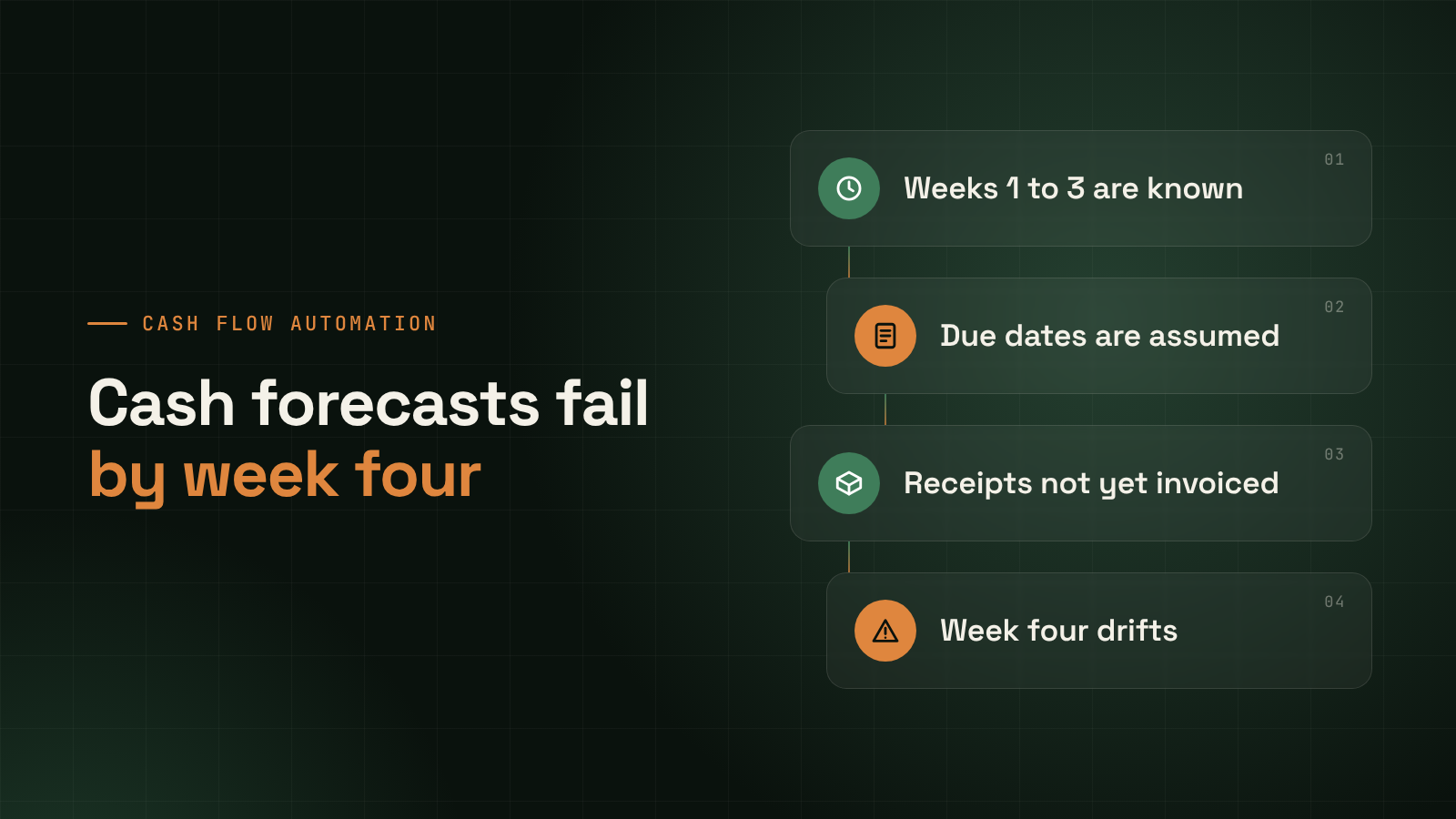
DSO falls when every overdue account gets chased every week, not just the loud ones. The agent runs that follow-up on a policy, holds every promise to its date and never skips a week, so payment dates move forward steadily and cash arrives on a rhythm. We do not quote a number for your ledger before we have seen it. Every logged promise also feeds the cash flow management view, so the forecast separates promise-backed receipts from estimates.
How is this different from a payment reminder tool?
A reminder tool sends the same nudge on a schedule. Collections automation done properly reads each account, groups a customer’s invoices into one conversation, re-checks the live balance in SAP before it speaks, pauses a disputed amount while still chasing the rest, reads the replies, and escalates when a promise breaks.
Is the agent a debt-recovery agency?
No. It is collections software your own team runs. It drafts and chases on your rules, nothing reaches a customer until a named person releases it, and it never harasses: one contact cap per customer per week, business hours only, and a disputed amount stops being chased the moment it is raised.
Is this credit control software?
In the UK sense, yes: it does the chasing, the promise tracking and the escalation that a credit controller runs, on the policy a credit controller sets. Credit limits and the decision to go legal stay with your people.
Can it put a customer on credit hold?
It recommends one, with the evidence: how far behind the account is, the promises broken and the exposure. Your finance head approves or dismisses it with a reason, and your team places the block on new sales orders in SAP. Releasing a hold needs a typed reason too. Key accounts are never put on hold by the agent; they go to your senior people.
Does it handle withholding tax, cheques and payments you cannot match?
Yes. A payment short by exactly the tax withheld at source, under the rules where you operate, is treated as settled, not chased. Cheques and post-dated cheques are logged on handover and tracked to clearing, and a bounce reopens the invoice. A payment that cannot be matched to an invoice goes to a person to apply, and the rest of the account is still chased. The agent never posts or applies a receipt itself.
What happens when a customer replies by email, phone or WhatsApp?
An email reply is read and classified; a call or a WhatsApp conversation is logged by your team in one form and handled the same way. The agent does not send WhatsApp messages or make calls. A promise to pay is logged with a date, an amount and an owner, and reminders pause until that day. A dispute pauses only the disputed amount, goes to a named owner with a deadline and escalates if the deadline passes; if your sales team agrees a credit, that amount stays paused until the credit note exists in SAP. A claim that payment was made is checked against SAP, never taken from the email, and the reminder waits until the receipt shows.
Does anything get sent without approval?
Not unless you decide it should. On day one every message is a draft and a named person releases it. Later you can let routine first reminders on recent, ordinary balances go out on their own, one ageing bucket at a time. Key accounts, firm letters, escalations and anything legal always wait for a person, and one click pauses all sending. Every draft, release, edit and hold is logged with who and why.
How long does it take to go live?
The agent already exists, so deployment is configuration and testing rather than a build: your SAP connection, your segments and ladder, your contact cap and the accounts reserved for people. Timing depends mostly on how quickly SAP and mailbox access are set up. You get a dated plan at the end of Map, and the agent drafts alongside your team on real accounts before anything is released.
NextBook a demo
See the agent work an ageing like yours
In the demo we run the agent on a sample ledger that looks like yours, show you the Monday queue, the reply handling and the promise timers, and talk through your segments, your SAP setup and who releases what. You’ll leave knowing whether receivables is the right place to start.
Free · 30 minutes. No data needed from you for the demo.
Related guides